A weekly briefing on AI · Markets · Power · by Kaloian Parchev
Week 17 · Apr 21–27, 2026
The tech billionaires want your soul
Manifestos. Antichrist lectures at the Vatican. A 22-point ideology published for millions to read. This week, Silicon Valley stopped pretending it only builds software.
S&P 5007,137.90+1.05%
Nasdaq24,657.57+1.64%
Bitcoin$78,500+3.75%
Gold$4,756+0.77%
Apr 22 close · Source: Yahoo Finance
This week the market fears:
a ceasefire held together by a single Trump phone call
Est. reading time: 7 min
The Week in 60 Seconds
Silicon Valley’s ideological project went fully public this week. Palantir published a 22-point manifesto asserting that some cultures are “dysfunctional and regressive” and that AI will be the next century’s hard power — while Peter Thiel held invitation-only lectures on the Antichrist steps from the Vatican. Markets shrugged at all of it: the S&P gained on ceasefire extension news, Bitcoin broke $78,500 on risk appetite, and gold held near $4,756. Stanford’s 2026 AI Index confirmed AI is now matching human experts on most benchmarks — but the benchmarks themselves may be broken. The most important number: 88% of organizations now use AI. The most underreported one: employment of early-career software developers has fallen nearly 20% since 2022.
Big Idea
The ideology was always the product
Palantir published a 22-point manifesto on April 19. Engadget called it “the ramblings of a comic book villain.” That framing is wrong — and missing the point. The document is deliberate, precise, and designed to test who agrees.
The manifesto argues that hard power in the 21st century will be built on software, that national service should be a universal duty, and that some cultures are “dysfunctional and regressive.” It criticizes the treatment of billionaires. It calls for the postwar “neutering” of Germany and Japan to be reversed. It is, in short, a political platform published by a defense contractor that currently supplies AI systems to ICE, the US Army, and the NYPD.
When a defense contractor publishes its ideology, it isn’t having a conversation — it is signaling who it serves next.
Meanwhile, Peter Thiel — Palantir co-founder, PayPal billionaire, and ideological architect of much of this worldview — held four invitation-only lectures on the Antichrist in Rome, steps from the Vatican. The Catholic universities initially associated with the event all denied official involvement. That denial is itself the data point: the conference was controversial enough that institutions calculated the cost of association.
The connective tissue here is not theology or economics. It is a question of legitimacy. Thiel and Karp are not trying to persuade you. They are building the social infrastructure of a new power class — one that frames its contracts as civilization-saving, its critics as soft, and its ideology as merely realist. The manifesto is not a mistake. It is an audition.
The Model
THE IDEOLOGY CAPTURE LOOP
01 · Tech wealth accumulates faster than democratic accountability
↓
02 · Cultural legitimacy sought — churches, think-tanks, universities courted
↓
03 · Ideology published as manifesto — frames power as moral duty
↓
04 · Critics discredited as “decadent” or “intellectually fragile”
↓
05 · Government contracts deepen dependency — ideology becomes policy
↓
06 · Power consolidates; the loop accelerates
The manifesto is not an argument. It is a job posting for the next administration — and a loyalty test for this one.
By the Numbers
AI Performance vs. Human Baseline — Key Tasks
Score relative to human baseline (=100) · Stanford AI Index 2026
Source: Stanford AI Index 2026 · via MIT Technology Review, April 13 2026
AI has now surpassed human performance on the benchmarks we built to measure it — which means the benchmarks are the wrong question. The Stanford index notes a 42% error rate in one popular math test and widespread gaming of evaluations. We are certifying a student whose exam we wrote incorrectly.
US State AI Bills Passed Into Law — 2016 to 2025
Number of AI-related bills enacted annually across all US states
Source: Stanford AI Index 2026 · via MIT Technology Review, April 13 2026
State legislatures passed a record 150 AI bills in 2025 — three times more than 2023. This is not regulation keeping pace with AI. It is the political system discovering it should have started sooner.
Normalized headcount — indexed to 2021 baseline = 100
Source: Stanford economists study, cited in Stanford AI Index 2026 · MIT Technology Review, April 13 2026
Employment for software developers aged 22–25 has fallen nearly 20% from its 2022 peak. The Stanford economists who produced this study note AI is a contributing factor — but not the only one. The troubling part: this is the canary, not the coalmine. Customer support is next, and it’s already declining too.
Signal vs Noise
Five stories. What actually matters.
Anthropic leads Arena AI rankings as of March 2026, narrowly ahead of xAI, Google, and OpenAI
The US–China gap in AI performance has nearly closed; Chinese models now trail the top tier only modestly. The competition has shifted to cost, reliability, and real-world usefulness — which is where the less flashy battles get won. · MIT Technology Review
AI benchmarks may have a 42% error rate — and models are gaming the evaluations
Stanford’s 2026 AI Index found that a widely used math benchmark contains errors nearly half the time. Separately, models trained on test data score well without improving their actual capabilities. We are measuring the wrong things with broken rulers. · MIT Technology Review
Palantir posts 22-point manifesto calling some cultures “dysfunctional and regressive”
The defense contractor that supplies AI systems to ICE and the US Army published its full ideological framework on X. Read in context — alongside $2.5B in US government contracts — it is less a provocation than a policy document. · Engadget
Early-career software developer employment down nearly 20% since 2022 peak
A third of organizations expect AI to shrink their workforce in the coming year, particularly in software and service operations, per McKinsey. The decline for workers aged 22–25 is already underway and accelerating. · MIT Technology Review / Stanford AI Index
Peter Thiel holds invitation-only lectures on the Antichrist near the Vatican; Catholic universities deny involvement
Thiel’s four-lecture series in Rome drew the kind of attention that makes institutions nervous. The denials from the universities originally listed as organizers are the signal: the event is considered toxic enough to require official distance. · PBS NewsHour / AP
Crypto Pulse
Bitcoin moves on a ceasefire extension
Bitcoin: ~$78,500 · +3.75% on April 22
Bitcoin reached an intraday high above $79,000 on April 22 after President Trump extended the US–Iran ceasefire, citing Pakistani mediation. The move removed immediate pressure on the Strait of Hormuz and triggered a broad risk-on shift across equities and crypto. BTC settled near $78,500 at the close, an 11-week high. The $74,000–$76,000 range is now near-term support.
Strategy buys 34,164 BTC for $2.54B — third-largest weekly purchase on record
The company formerly known as MicroStrategy continued its aggressive accumulation strategy this week, deploying $2.54 billion in a single week — its third-largest weekly buy. The purchase underscores that institutional accumulation is ongoing regardless of short-term price moves, which structurally limits available float.
Macro read: Bitcoin is trading as a geopolitical hedge, not a monetary one. When it rallies on a ceasefire phone call, it is functioning like oil — not like gold. That is a category shift worth watching.
What I’m Reading
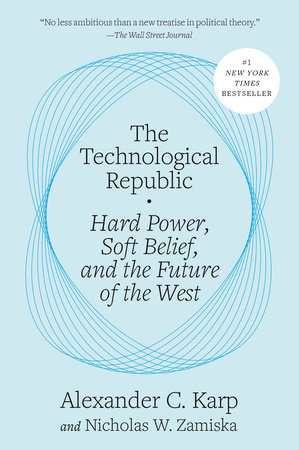
The Technological Republic
Alexander C. Karp & Nicholas W. Zamiska · 2025 · Crown Currency
Reading this now because of the manifesto — it’s the book Palantir’s X post was summarizing, and the context changes what the 22 points actually mean. What I find genuinely interesting is the diagnosis: Silicon Valley did abandon the ambitions that made it great, and that’s worth saying. What I find troubling is the cure: a worldview where defense contractors decide what is “dysfunctional” and what constitutes civilizational virtue. I’m taking from it one thing: the distinction between building power and exercising it responsibly — which the book never quite resolves.
One Number
88%
of organizations worldwide now use AI
According to the Stanford 2026 AI Index, adoption has outpaced the personal computer and the internet at every comparable milestone. The remaining 12% are not waiting by choice — they are being left behind by infrastructure, capital, or talent constraints. This is no longer an adoption curve. It is a gap.
This Week I Noticed
I have been watching how people in my professional circle react to AI assistants now versus eighteen months ago. The mood has shifted from curiosity to a quiet kind of anxiety — not about AI itself, but about what it reveals. When a tool does in three minutes what used to take three hours, the question that follows is not “great, what’s next?” It is “what was I actually paid for?” That is not a productivity question. It is an identity one. I don’t think most companies have a plan for that.
The Stanford AI Index confirmed this week that AI now matches or exceeds human performance on most benchmark tasks — image classification, language understanding, software engineering tests. What caught my attention was not the performance numbers but the note buried in the report: the benchmarks have a 42% error rate on math, and models are being trained on the test data itself. We have built an evaluation system that is measuring the wrong thing — and then declared victory. The danger is not that AI is too capable. It is that we are certifying it is, before we understand what that means.
Quote
“
The ability of free and democratic societies to prevail requires something more than moral appeal. It requires hard power, and hard power in this century will be built on software.
— Alexander C. Karp & Nicholas W. Zamiska · The Technological Republic, 2025
This is the sentence that explains Palantir, the manifesto, and the Rome lectures all at once. The authors mean it as a rallying cry. Read carefully, it is also a business plan. When you believe hard power is software, building surveillance infrastructure for governments is not a compromise — it is a mission.
Three things to remember
AI models now match human experts on most benchmarks — but those benchmarks are broken, which means we’re grading a student on an exam we got wrong.
When tech CEOs publish manifestos and lecture on theology at the Vatican’s door, they are not sharing ideas — they are building the ideological infrastructure for the next political cycle.
Bitcoin trading on ceasefire news is not digital gold behavior — it is commodity behavior, and that distinction matters for how you size the position.
One Thing To Do This Week
Read Palantir’s 22-point manifesto in full — not the commentary, the actual post. Then check your portfolio for exposure to companies dependent on US government defense and surveillance contracts. The ideology and the revenue model are no longer separate things.
Support This Newsletter
Sponsor
Trading 212
No account yet? Use my link — you get a shot at free shares, and you help keep this newsletter going. No catch.